News
University Holds the First Session of the 2026 Party Member Group Study
2026-10-15
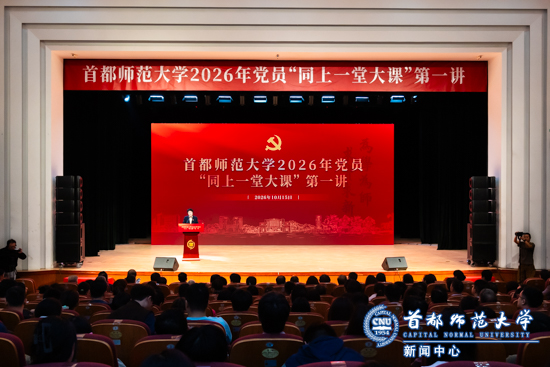
Number of hits:On the afternoon of October 15, CNU launched the first session of its 2026 Party‑member group study. Designed to thoroughly study and implement Xi Jinping Thought on Socialism with Chinese Characteristics for a New Era and Xi Jinping Thought on Party‑building, the event aims to strengthen theoretical education on the Party Members about Party’s innovative theories. More than 5,000 Party members across the university attended simultaneously at 42 venues on seven campuses to listen to a special Party lecture delivered by Professor Xie Chuntao, Executive Vice‑President (Vice‑Director) of the Party School of the CPC Central Committee (National Academy of Governance). Wang Fang, former Party Secretary of Beijing University of Chemical Technology and other officials were present to offer guidance. Cao Wenjun, Party Secretary of CNU, presided over the activity.
Centered on the great rejuvenation of the Chinese nation and drawing on abundant CPC historical cases, Professor Xie reviewed the glorious course of the CPC leading the nation toward rejuvenation across four historical stages. He interpreted the scientific connotation and practical pathways of Chinese‑style modernization and expounded the major thesis that CPC leadership constitutes the fundamental guarantee for national rejuvenation. He called on all Party members to fully understand the decisive significance of the establishment of both Comrade Xi Jinping's core position on the Party Central Committee and in the Party as a whole and the guiding role of Xi Jinping Thought on Socialism with Chinese Characteristics for a New Era, strengthen the “Four Consciousnesses”, bolster the “Four‑sphere” Confidences, ensure the “Two Upholds”, and strive for building a great modern socialist country and realizing the Chinese nation’s great rejuvenation.
Cao Wenjun remarked that the lecture carries strong theoretical and practical implications, and put forward three requirements for future basic training for Party members.
After the lecture, Wang Fang took part in seminars of two grassroots Party branches. Participating Party members commented that the lecture delivered profound Party‑spirit education. They pledged to translate theoretical insights into concrete actions, integrate personal development into the development of the university and the country, and make due contributions.