News
CNU Holds Online Cooperation Exchange Meeting with Laurentian University of Canada
2026-10-21
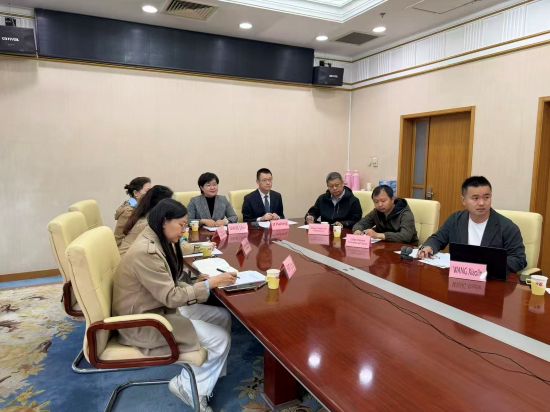
Number of hits:On October 21, CNU held an online cooperation exchange meeting with Laurentian University, Canada. Li Hailiang, Member of the Standing Committee of University Party Committee and Vice‑President, attended the meeting, alongside relevant administrators and academic leaders from the Office of International Cooperation and Exchange, Department of Chemistry, College of Life Sciences, College of Resource Environment and Tourism, and College of Information Engineering. Alain Simard, Provost and Vice‑President (International) of Laurentian University, together with deans of relevant faculties and the head of its China Office, participated in the session.
Li Hailiang noted that both universities boast prominent strengths and high compatibility in chemistry, biology, computer science and other disciplines. Wide‑ranging consensus has previously been reached on inter‑university joint education programs. He hoped that this meeting would serve as a new starting‑point to clarify cooperation priorities, refine implementation plans, accelerate the launch of joint education initiatives and expand exchange channels for faculty and students. Alain Simard outlined Laurentian University’s institutional features and disciplinary strengths, acknowledged the mutual‑beneficial nature of the partnership, and expected tangible deliverables from future cooperation.
The two sides engaged in in‑depth discussions on key disciplines including chemistry, biology & resource‑environment studies, and computer engineering. Multiple colleges and departments at our university feature complete talent‑training frameworks and key scientific‑research platforms. Laurentian University’s chemistry programs are accredited by the Chemical Institute of Canada, with distinctive strengths in wildlife conservation, game design and AI laboratories construction, highlighting strong disciplinary complementarity between the two institutions. Participants deliberated on models such as joint education and integrated bachelor‑master training. It was agreed that respective faculties would put forward cooperation proposals based on disciplinary realities, and convene a second special coordination meeting promptly to elaborate practical details covering curricula and faculty deployment.
Marking the first university‑level online dialogue between the two sides, the event lays groundwork for advancing joint‑education projects. Our university will keep following‑up on collaborative intentions to contribute to Sino‑Canadian higher‑education and people‑to‑people exchanges.