News
2026 Symposium on Partial Differential Equations in Fluid Mechanics and Related Topics Held in Beijing
2026-06-30
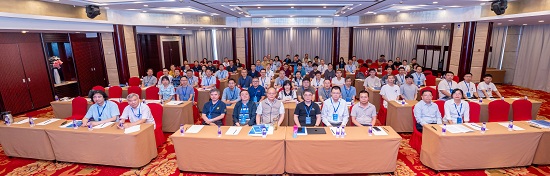
Number of hits:From June 26 to 28, the 2026 Symposium on Partial Differential Equations in Fluid Mechanics and Related Topics convened in Beijing. Co-hosted by the Academy for Multidisciplinary Studies and the School of Mathematical Sciences of CNU, the event brought together experts from universities and research institutes nationwide to discuss cutting-edge research on partial differential equations (PDEs) in fluid mechanics.
At the opening ceremony, Li Hailiang, Member of the Standing Committee of University Party Committee and Vice President, outlined the university’s disciplinary development plans. He noted that CNU would recruit more young scholars and leverage the symposium to strengthen academic collaboration, supporting basic education and scientific innovation in Beijing. Tang Shun, Executive Vice Director of the Academy for Multidisciplinary Studies, and Zhang Zhenlei, Dean of the School of Mathematical Sciences, delivered successive addresses. They expressed gratitude for consistent academic support and pledged to sustain high-quality academic exchange platforms. Zhang Ping, Member of the Chinese Academy of Sciences and Dean of the Academy of Mathematics and Systems Science, highlighted strong national support for fundamental research. He acknowledged that theories of fluid mechanics have reached the international frontier yet gaps remain compared with leading mathematical powers, encouraging scholars to advance research for building a country strong in science and technology.
Invited speakers from the Chinese Academy of Sciences, Peking University, Nankai University, Wuhan University and other institutions presented reports covering fluid equations, plasma equations, stochastic magnetohydrodynamic equations and other frontier subjects. Scholars from Tsinghua University, Shanghai Jiao Tong University, Beijing Normal University and CNU faculty and students participated in exchanges.
The symposium served as a high-end academic platform for sharing cutting-edge research findings. The two co-hosting units coordinated closely to ensure smooth operation of the event. Moving forward, they will integrate disciplinary strengths, expand domestic and international academic partnerships, advance the development of mathematics, and contribute to scientific and educational progress in Beijing.